Millions of people in the UK file a tax return every year. It covers the self-employed, landlords, company directors, and anyone with untaxed income. Missing the deadline or filing it incorrectly can lead to real penalties from HMRC. But getting it right is not as hard as it sounds.
You just need the right documents, a clear process, and an understanding of what HMRC Self Assessment actually requires from you. The earlier you start, the less stressful it becomes. However, one key question many people overlook is: Do you actually know which expenses you are allowed to claim?
What Is a Self-Assessment Tax Return?
A Self Assessment tax return is how you tell HMRC about your income. Unlike employees on PAYE, your tax is not taken out automatically. You have to work it out and report it yourself.
HMRC uses your return to calculate what you owe. You then pay that amount directly. It covers income tax, National Insurance contributions, and sometimes Capital Gains Tax.
Who Needs to Complete a Tax Return?
Not everyone needs to file. But you do if any of the following apply to you. Knowing this early saves you from surprise penalties.
You must complete a UK Self Assessment tax return if you are:
- Self-employed and earning over £1,000 a year
- A landlord with rental income
- A company director receiving dividends
- Earning over £100,000 per year
- Receiving foreign income or capital gains
If HMRC sends you a notice to file, you must submit one. Even if you have no tax to pay.
Key Deadlines You Must Know
Missing a self-assessment deadline leads to automatic fines. Mark these dates in your calendar right now.
| Deadline | What It Is |
| 5 October | Register for Self Assessment (first-timers) |
| 31 October | Paper tax return filing deadline |
| 31 January | Online filing and tax payment deadline |
| 31 July | Second payment on account (if applicable) |
If you miss the 31 January online deadline, HMRC charges an automatic £100 fine. This grows the longer you delay.
How to Register for Self Assessment
Before you can file, you need to register. This is a simple but important first step in the HMRC tax return process.
Here is how to do it:
- Go to GOV.UK and create a Government Gateway account
- Provide your National Insurance number and personal details
- HMRC will post your Unique Taxpayer Reference (UTR) within 10 working days
- Use your UTR and Gateway login to access and file your return
First-time filers who are self-employed must register by October 5 after the end of the tax year. You can register yourself on GOV.UK, or let our Self Assessment service handle the entire process for you, from registration to submission.
What Information and Documents Do You Need?
Good record-keeping is the foundation of a stress-free tax return in the UK. Gather everything before you start. Having these documents ready makes the whole process much quicker and easier.
Your Personal and Income Records
You will need your UTR number, Government Gateway login, and your P60 or P45 if you were also employed. Keep all invoices and bank statements handy, too.
Your Business Expenses and Receipts
Every allowable business expense reduces your tax bill. This includes travel, equipment, office supplies, and professional fees. Vital Accountax’s Bookkeeping service keeps your records organized year-round, so nothing gets missed.
Other Relevant Documents
You will also need details of pension contributions, Gift Aid donations, and any capital gains from the sale of shares or property. If you have sold assets, the CGT Returns service can help you report them correctly.
How to Fill In and Submit Your Tax Return
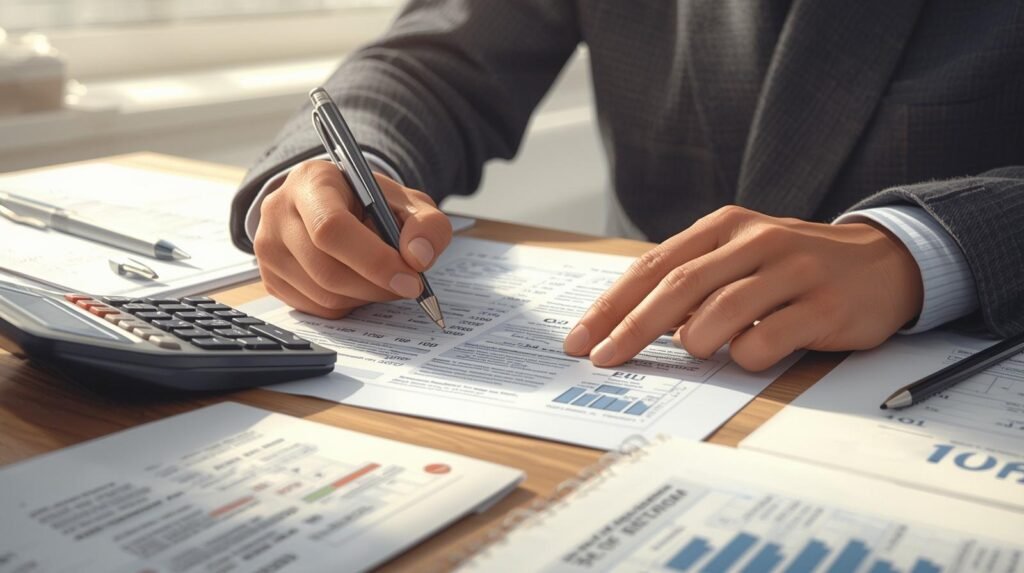
Once you have everything ready, filing your online Self Assessment is straightforward. Follow these steps carefully to avoid errors.
- Log in to the HMRC website using your Government Gateway details
- Select “Complete your tax return” for the relevant tax year
- Fill in the SA100 main form with your income and personal details
- Add supplementary pages if needed: SA103 (self-employment), SA105 (property income), SA108 (capital gains)
- Enter all your allowable expenses to reduce your taxable income
- Review carefully, then submit before 31 January
HMRC automatically calculates your tax bill when you file online. You will see exactly what you owe straight away.
Common Mistakes to Avoid
Even small errors can cause problems with HMRC. Knowing what to watch out for helps you file with full confidence.
Leaving it too late is the most common mistake. Start early so you have time to gather records properly. Forgetting expenses is another big one. Many people miss out on tax relief they are fully entitled to.
Do not forget to claim relief on pension contributions and Gift Aid. These can lower your bill significantly. Our Payroll service also keeps your employer records compliant all year.
Made a mistake after filing? You can correct your self-assessment tax return up to 12 months after the deadline.
How to Pay Your Tax Bill
After you submit, it is time to pay. All Self Assessment payments are due by 31 January. A second payment on account may be due by 31 July.
You can pay HMRC by online banking, Direct Debit, debit or credit card, or at your bank. Set money aside throughout the year. This way, you avoid a surprise bill in January.
If you cannot pay in full, contact HMRC early. They may let you set up a Time to Pay arrangement to spread the cost.
Do You Need an Accountant for Your Tax Return?
Filing your own return is possible. But it takes time, and mistakes are easy to make. A qualified accountant makes sure everything is correct and submitted on time.
This matters most if you have multiple income streams, run a business, or own rental property. Vital Accountax offers a full Self Assessment service from registration right through to submission.
We also offer VAT Returns, CIS Returns, Accounts, and CT600, Company Formation, and more. Whether you are a sole trader, limited company, or startup, there is a service built for your needs.
Conclusion
Doing a tax return in the UK does not need to be stressful. The key steps are simple: register on time, gather your records, fill in your return, and pay by the deadline. The earlier you start, the easier it gets.
Good habits throughout the year make a big difference. Do not wait until January to get organised.
Need expert support?Get in touch with Vital Accountax today and let us take the stress out of your Self Assessment.