If you run a limited company in the UK, tax compliance is something you simply cannot ignore. One term that comes up early and often is the CT600.
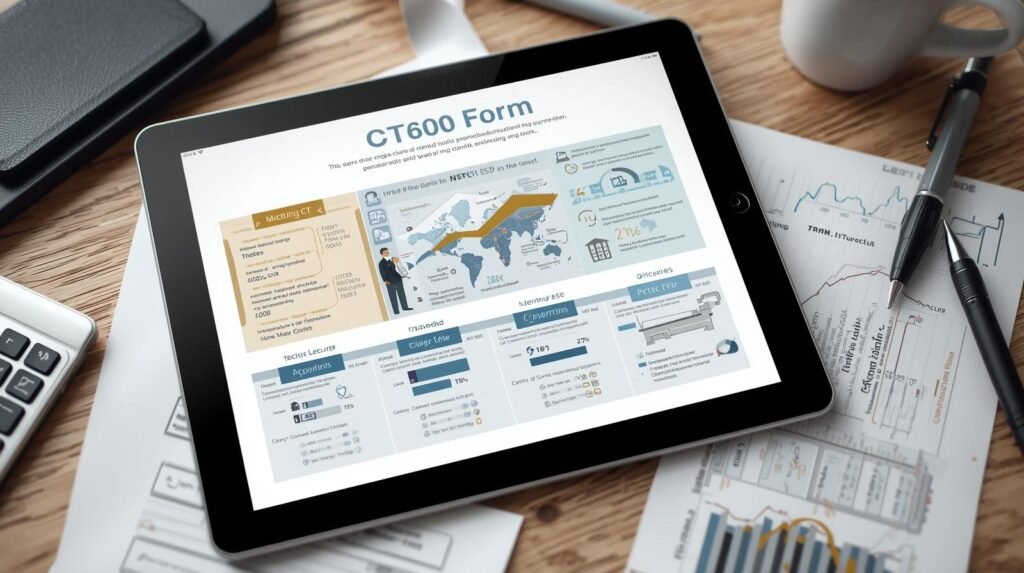
The CT600 form in the UK is the official company tax return that every UK limited company must submit to HMRC once a year. It reports your company’s taxable profits, losses, and allowable deductions for the accounting period, and it is how HMRC works out exactly how much corporation tax your business owes. In short, it is the document that settles your company’s annual tax bill with the government.
But here is something many business owners do not realize until it is too late: filing it incorrectly or missing the deadline can cost you far more than the tax itself. So, what exactly goes inside a CT600, and is your company handling it the right way?
What Is the CT600 Form UK?
The CT600 form from the UK is the official company tax return form. Every UK limited company must send it to HMRC once a year. It tells HMRC about your company’s income, expenses, and how much corporation tax you owe.
The CT600 is not the whole return on its own. It goes to HMRC alongside your statutory accounts, tax computations, and any extra pages needed. Think of it as the key document that ties your full corporation tax return together for the accounting period.
Who Needs to Submit a CT600 Form?
Almost every company registered at Companies House must file a CT600, even if it made no money that year. Here is a quick list of who must submit:
- Private limited companies and public limited companies
- Foreign companies with a UK branch or office
- Charities and community interest companies with trading income
- Trade associations, housing associations, and community amateur sports clubs
Sole traders and standard partnerships do not file a CT600. They use a self-assessment tax return instead. If you are a sole trader, you can learn more about how we help with self-assessment at Vital Accountax.
What Information Is Included in the CT600 Form?
The CT600 includes several key sections, each directly affecting your tax calculation. Below are the four main parts that most companies need to complete.
Company Details and Accounting Period
This section covers the basic facts. You enter your company name, Unique Taxpayer Reference (UTR), and registration number. You also confirm which accounting period the return covers. No corporation tax accounting period can be longer than 12 months.
Trading Income and Other Profits
Here you report all the money your company earned during the year. This includes trading profits, bank interest, rent received, and any chargeable gains. HMRC uses this to build a full picture of your company’s taxable income.
Allowable Deductions and Tax Reliefs
This is where you legally reduce your taxable profits. You can claim capital allowances on equipment, trading losses carried forward, and qualifying donations. If your business invests in research and development, you may also claim R&D tax relief, which can lead to a useful saving on your tax bill.
Tax Calculations, Payments, and Director Declaration
Using all the figures above, the CT600 works out your final corporation tax liability. You also record any tax already paid, and a company director signs to confirm everything is accurate and true.
What Are the CT600 Supplementary Pages?
Some companies need extra pages filed alongside their CT600. These cover specific situations that do not apply to every business. The three most common are CT600A for director loans, CT600C for group relief claims, and CT600L for R&D tax credit claims. Your accountant will confirm which ones apply to your company.
CT600 Deadlines and Late Filing Penalties
Two key dates matter here, and mixing them up is a common and costly mistake. Your CT600 filing deadline is 12 months after the end of your accounting period. Your corporation tax payment is due earlier, at 9 months and 1 day after the period ends.
Late filing penalties grow fast. One day late brings a £100 fine. Three months late adds another £100. At six months, HMRC adds 10% of the unpaid tax. At 12 months, a further 10% is added on top.
How to File Your CT600 Form: Step by Step
The good news is that filing your company tax return does not need to be complicated. Follow these five simple steps.
- Step 1: Gather your profit and loss accounts, balance sheet, and any capital allowance or relief details.
- Step 2: Log in to HMRC or use approved commercial software to access the CT600. From April 2026, all companies must use commercial software to file.
- Step 3: Complete every section with accurate financial figures.
- Step 4: Review carefully before you submit. Even small errors can trigger delays or penalties.
- Step 5: Pay your corporation tax by the payment deadline to avoid interest charges.
Common Mistakes to Avoid When Filing CT600
Even careful business owners slip up sometimes. Watch out for these frequent errors:
- Missing the filing deadline or the tax payment due date
- Entering the wrong UTR or company registration number
- Claiming expenses that HMRC does not allow
- Missing income sources, such as bank interest or foreign earnings
- Tackling complex tax affairs without professional support
Should You Use an Accountant to File Your CT600?
You are allowed to file your own CT600, but getting it wrong is costly. A qualified accountant makes sure your return is accurate, on time, and takes advantage of every relief you are entitled to.
At Vital Accountax, our Accounts and CT600 service is built for UK limited companies just like yours. We handle your corporation tax return from start to finish. We also support you with bookkeeping, VAT returns, payroll, and confirmation statements, putting all your compliance in one place. If you are just starting, our company formation service helps you launch the right way from day one.
Frequently Asked Questions
Can I file my own CT600 without an accountant?
Yes, you can file it yourself. But you must make sure every figure is correct. If your company has complex finances, professional help is worth it.
Can I amend a CT600 after submission?
Yes. HMRC lets you make changes within 12 months of the original filing deadline. After that, you must write to HMRC directly to make corrections.
Do I need to file a CT600 for a dormant company?
Not always. Once you have told HMRC your company is dormant, you may not need to file for that period. Always check with HMRC or your accountant to be sure.
Let Vital Accountax Handle Your CT600
The CT600 form in the UK is a must for most UK limited companies. Filing it correctly keeps your business safe from fines and HMRC trouble. If you want expert help with your corporation tax return, get in touch with the team at Vital Accountax today.